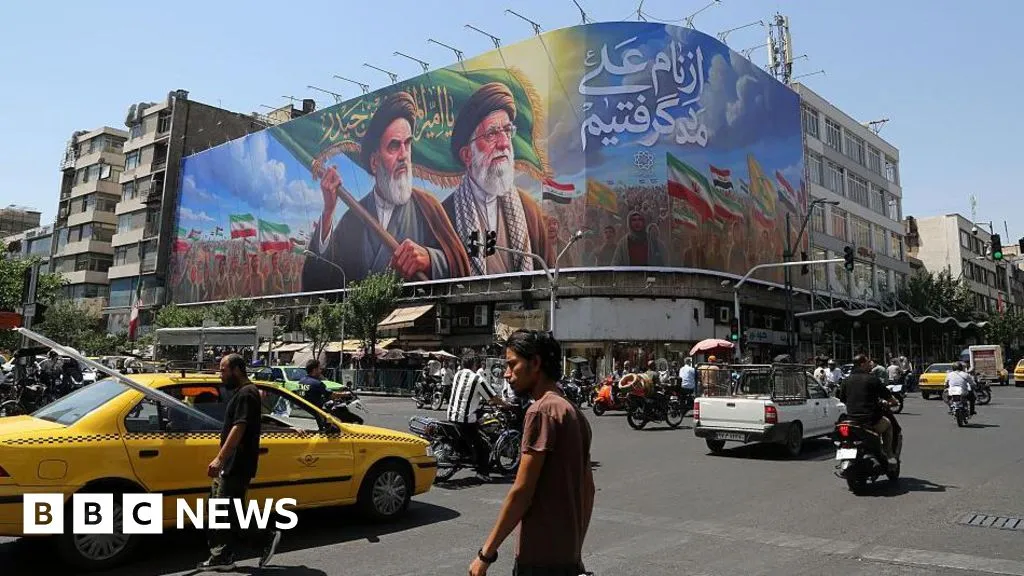
Tehran has firmly rejected claims made by U.S. President Donald Trump that a significant deal to end the ongoing conflict with Iran has been reached, citing instead that reports are merely "speculative" and nothing has been solidified.
In a vivid back-and-forth, Trump characterized the situation as nearing resolution, stating on Thursday that after a period of military escalation, including threats to strike against Iran, the U.S. had converged on what he called a "great settlement." He suggested that the finalization of documents was imminent and hinted at a signing ceremony potentially taking place in Europe. However, Iranian Foreign Ministry spokesperson Esmail Baghaei contradicted these assertions, stating unequivocally, "nothing has been finalized."

Despite a ceasefire agreement established in April, intermittent hostilities continue to mar the landscape, underscoring the volatile dynamics between Tehran and Washington. On 28 February, a series of wide-ranging airstrikes were launched by the U.S. and Israel against Iranian targets. In retaliation, Iran conducted attacks on Israel and American-aligned states in the Gulf, subsequently shutting down the vital Strait of Hormuz, a key conduit for global oil and liquefied natural gas shipments. This has created significant economic ripple effects, as evidenced by the recent decline in Brent crude oil prices to approximately $89 a barrel.
Trump's recent comments suggested faith in an agreement designed to prevent Iran from acquiring nuclear weapons, which he dubbed a major achievement. "We have a deal that Iran will never have a nuclear weapon," he proclaimed. However, Baghaei maintained that while a substantial portion of the agreement’s text had been prepared, U.S. negotiators were placing "excessive demands" and introducing new stipulations that Iran was unwilling to accept. He emphasized that the Islamic Republic would not retreat from its core interests.
In a notable twist, Trump's assertions have not only been met with skepticism from Iran but also cast shadows on the broader regional stability, with Israeli Prime Minister Benjamin Netanyahu acknowledging discussions with the U.S. leader. While Netanyahu expressed gratitude for continued American efforts toward a final agreement focused on restrictions on Iran's nuclear and missile programs, he also reiterated that Israel was not a signatory to any potential memorandum of understanding.
As the situation evolves, the urgency for a resolution remains palpable, with the White House keenly aware of rising tensions. With the first half of 2026 drawing to a close, both nations continue to navigate a precarious path fraught with uncertainty, as Trump previously indicated that a deal could come "relatively quickly," though subsequent comments have cast doubt on those assertions.
Continued military posturing from the U.S. only complicates matters further. Just hours before addressing the settlement, Trump threatened to escalate actions against Iranian oil infrastructure, a vital economic lifeline for the country, intensifying fears of potential retaliation. The implications of any further aggressive actions could destabilize the region even further, as Iran has warned of responses that would be "more severe than before." As discussions proceed with no clear resolution in sight, the global community watches with trepidation.
Source: BBC News
Source: BBC World News