Iran has claimed that the United States has provided a response to its latest peace proposal, a development that could reshape ongoing tensions in the region. According to Iranian state media, this communication was facilitated via Pakistan, and is now under review by Tehran's officials.
While the U.S. has not yet formally confirmed its reply to the Iranian initiative, President Donald Trump reportedly deemed the proposal 'unacceptable' in an interview with Israel's Kan News. This assertion raises questions about the prospects for peace as military rhetoric continues to dominate the discourse between the two nations.
The Iranian Proposal
The peace proposal, described as a 14-point plan by Iran, includes a series of demands directed at Washington: calling for the withdrawal of U.S. forces from areas near Iran's borders, an end to the naval blockade affecting Iranian ports, and the cessation of hostilities, particularly regarding Israel's actions in Lebanon. Tehran emphasizes the urgency of reaching a mutual agreement within the next 30 days, urging both sides to prioritize efforts to end the ongoing conflict rather than merely prolonging a current ceasefire.
Iran's Foreign Ministry spokesperson, Esmaeil Baghaei, highlighted that the ongoing nuclear negotiations are not part of the current dialogue, despite Washington's insistence on embedding such discussions in any potential agreement. The Iranian government maintains that its nuclear program is purely for peaceful purposes, even as it stands as the only non-nuclear state enriching uranium near weapons-grade levels.
Trump's Response and Military Options
In a significant move, Trump declared that the U.S. would assist countries with shipping operations in the strategically vital Strait of Hormuz, indicating a proactive stance. The president, speaking on social media, has launched what he termed 'Project Freedom,' aimed at ensuring safe navigation through these contested waters, linking this initiative to broader regional stability.
"For the good of Iran, the Middle East, and the United States, we will guide ships safely out of restricted waterways," Trump stated, while threatening military action if the initiative faced any disruptions. His administration has previously restricted maritime traffic through the Strait, intensifying the geopolitical stakes involved.
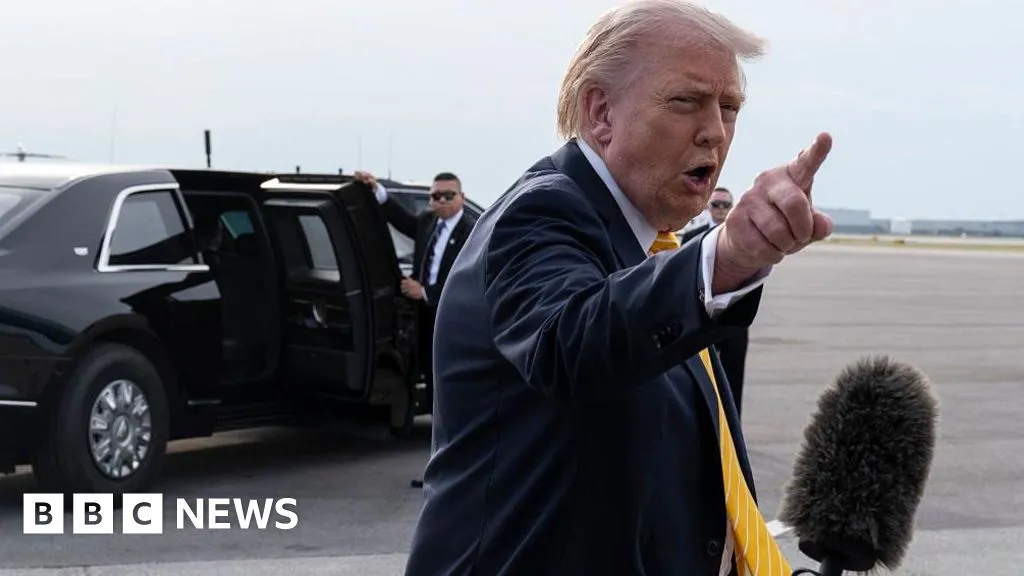
As tensions escalate, Trump remains cautious yet assertive regarding military engagement. Speaking from Florida, he acknowledged the possibility of renewing military strikes against Iranian targets, contingent on Iran's behavior. "If they misbehave, we'll see what happens," he noted, underscoring a commitment to ongoing military presence in the region.
Conclusion and Legislative Considerations
The complexity of the situation is further heightened by legal frameworks governing U.S. military action. Trump recently communicated to Congress that the war could be considered 'terminated' due to a ceasefire enacted in early April, thus sidestepping the necessity for immediate legislative approval for military interventions.
As both nations navigate this fraught landscape, the response to Iran’s peace proposal could be pivotal in determining the trajectory of U.S.-Iran relations. With both sides entrenched in their positions, the global community watches closely for the next developments in this high-stakes diplomatic standoff.
Source: BBC News
Source: BBC World News