As tensions between the Middle East powers intensify, the United States and Iran are set to engage in crucial talks this weekend in Switzerland, following Iran's assertion that it has closed the strategically vital Strait of Hormuz in response to escalating Israeli strikes on southern Lebanon. While Tehran cites these military operations as a direct threat, the US military swiftly countered, affirming that maritime traffic in the region remains unaffected.
The urgency of this diplomatic meeting comes on the heels of a tragic escalation in violence, where at least 47 people lost their lives during a series of Israeli air raids on Lebanon, as reported by the country's health ministry. The Israel Defense Forces (IDF) indicated that it targeted sites affiliated with the Iran-backed militia, Hezbollah, sparking further anxiety in an already volatile environment that has reverberated through global markets.
[picture]
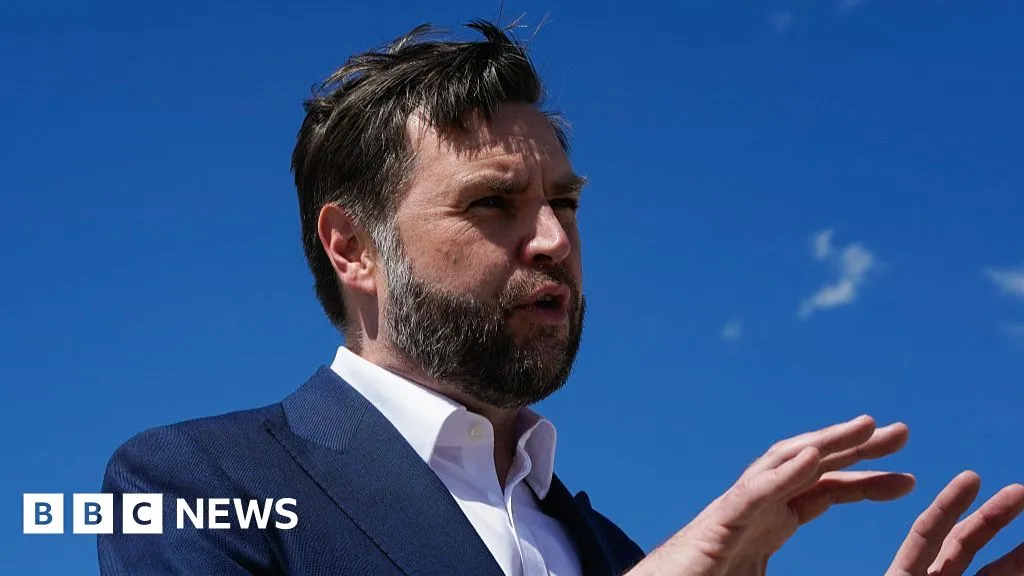
US Vice President JD Vance departed from Washington on Saturday, arriving in Switzerland where discussions are anticipated to start on Sunday. With him will be a robust Iranian delegation led by Parliament Speaker Mohammad Bagher Ghalibaf and Foreign Minister Abbas Araghchi. Vance expressed hope for progress on the nuclear issue and a lasting ceasefire in Lebanon, emphasizing the importance of ensuring safety and security for both Israel and Lebanon amidst ongoing skirmishes.
"It’s about managing the situation continuously to maintain stability throughout the region," Vance stated prior to his departure, underscoring the significant tensions that characterize the conflict. Iran's Foreign Ministry spokesman, Esmail Baghaei, insisted that their side will demand that the US uphold its commitments under the recently negotiated agreement, which aims to halt hostilities.
Notably, Pakistan's Prime Minister Shehbaz Sharif is also set to attend these discussions, marking his country’s role as a mediator in the recent hostilities. Earlier this week, agreement was reached between the US and Iranian presidents, which included immediate cessation of conflict in Lebanon as part of a broader strategy to ease tensions, with aims for a comprehensive resolution in the coming two months.
Despite this diplomatic progress, the backdrop of violence remains dire. Clashes between Israeli forces and Hezbollah have continued unabated, with fatalities and injuries mounting rapidly. Since the resurgence of hostilities on March 2, Lebanon's health ministry has reported over 4,000 deaths attributed to this conflict.
The recent bombing campaigns have drawn severe criticism from the US, which views these actions as counterproductive to the ongoing peace negotiations. Meanwhile, Iran has accused Israel of attempting to thwart the US-Iran deal, escalating calls for the international community's engagement.
In response to Iran's announcement of closing the Strait of Hormuz, US Central Command (Centcom) spokesperson Tim Hawkins reassured that maritime traffic remains stable, confirming that 55 merchant vessels passed through the strait on Saturday alone, ensuring that over 17 million barrels of oil continued to flow into global markets.
The days ahead will be pivotal, as the international community watches closely to see if these high-stakes discussions can yield a cessation of violence and foster a more peaceful Middle East.
Source: BBC News
Source: BBC World News