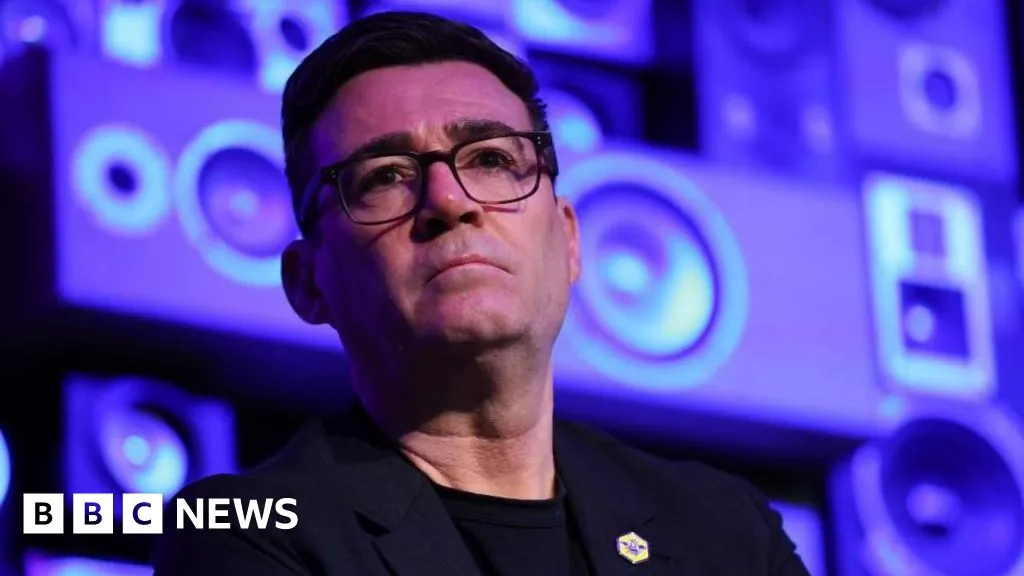
The UK is grappling with a significant economic upheaval, as borrowing costs have soared to an 18-year peak and the value of the pound has declined sharply amidst escalating leadership tensions. The latest market reactions are closely tied to concerns surrounding Andy Burnham's recent announcement to contest a parliamentary seat, fueling fears of increased government borrowing should he ascend to a leadership position.
On Friday, the yield on 10-year gilts, a key indicator of government borrowing costs, surged past 5.14%, reaching its highest level since 2008. Meanwhile, the pound tumbled by 0.3% against the US dollar, settling around $1.337, a stark response following Burnham's provocative statement. Kathleen Brooks, research director at XTB, noted that the pound has depreciated by 1.5% over the week, a testament to market sentiment shifting unfavorably towards Burnham's candidacy.
Market Reactions Reflect Political Climate
Analysts have highlighted that the market’s reaction is a direct reflection of Burnham’s perceived stance on fiscal policy. With fellow contender Wes Streeting's resignation not eliciting similar market decline, Brooks remarked, "This indicates that Burnham is viewed as the least market-friendly candidate." As uncertainty mounts, long-term borrowing costs have also escalated, with the yield on 30-year gilts hitting a staggering 5.82%—the highest in nearly three decades.
While other European nations are experiencing rising borrowing costs in tandem with the UK, the intensity of the UK's shifts suggests a deeper, underlying anxiety about fiscal responsibility should Burnham secure leadership. The ongoing tensions in the Middle East, particularly the Iran war, are exacerbating economic instability as energy prices soar. The global benchmark for oil, Brent crude, eclipsed $109 per barrel before retracting slightly, further complicating the economic landscape.
Speculation Around Leadership Contest
Burnham, currently serving as the Mayor of Greater Manchester, has vowed to revitalize the Labour Party, asserting that a shift in government under his leadership would be pivotal. "We will change Labour for the better and make it a party you can believe in again," he stated. However, his pathway to Parliament is fraught with challenges, requiring not only selection as a candidate in Makerfield but also victory in a competitive by-election against Reform UK.
Despite the uncertainty surrounding his bid, his previous comments—advocating for a departure from reliance on bond markets—have already rattled financial confidence, leading AJ Bell's investment director Russ Mould to warn of possible prolonged market instability. "The process involving Burnham promises to be more protracted and 'noisy', exacerbating uncertainty in the UK’s political arena," Mould commented.
Broader Economic Implications
Even as Burnham plots his political comeback, the ramifications of his leadership hopes are sending ripples through broader financial markets. UK stocks reflected this turbulence, with the benchmark FTSE 100 index sinking by 1.7% on Friday, aligning with broader European market trends.
As the political landscape continues to evolve, traders and investors are bracing for what lies ahead. The dual threats of political instability and economic undercurrents raise critical questions about the future direction of the UK’s fiscal policies and their implications for growth.
For stakeholders monitoring these developments, the convergence of political ambition and financial viability suggests a pivotal moment for the UK's economy as the leadership contest unfolds.
Source: BBC News
Source: BBC Business