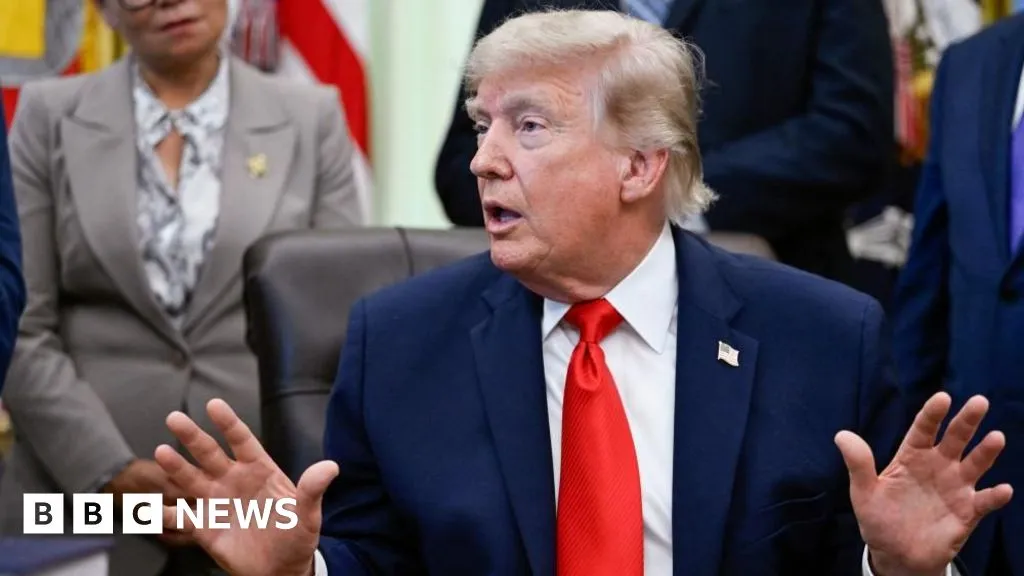
In a dramatic turn of diplomatic events, President Donald Trump has asserted that a contentious agreement to resolve the conflict between the United States and Iran will be signed this Sunday. However, Iranian officials have swiftly countered the timing, casting uncertainty on the anticipated deal.
On a platform known for its unfiltered communication, Trump declared, "The Deal is scheduled to get signed tomorrow, and immediately after it is signed, the Hormuz Strait is OPEN TO ALL." This crucial maritime corridor serves as a lifeline for global oil shipments, and the President’s statements suggest its reopening is a key element of the negotiations.
Despite Trump's optimistic announcement, Iranian foreign ministry spokesman Esmail Baghaei tempered expectations, stating, "We will have to wait and see about the exact date of the signing of the memorandum of understanding, although it will not be tomorrow [Sunday]." His remarks indicate a significant disparity in the two nations' perceptions of the deal's timeline.
Adding to the complexity of the situation, a delegation from Qatar, another key mediator, has arrived in Tehran. Iranian media reported on the timing of this visit, raising questions about its potential influence on the agreement’s finalization. Meanwhile, Pakistani Prime Minister Shehbaz Sharif expressed confidence that peace is closer than ever, hinting at preparations for an electronic signing of the agreement as early as within 24 hours.
Trump has reiterated his commitment to addressing Iran’s nuclear program, stating that once conditions are favorable, the U.S. will act to "get the Nuclear Dust" on Iran's enriched uranium stockpiles. For years, Iran has faced accusations from Western nations of pursuing nuclear weapons, a charge the Iranian government vehemently denies, asserting its nuclear activities are for peaceful purposes.
Reflecting on the fragile state of affairs, Trump warned that if negotiations did not proceed "quickly, easily and smoothly," the U.S. would have "the ultimate alternative, hopefully never to be used again!"
As U.S.-Iran tensions persist, reports suggest that the underlying conflict involving Israel and Hezbollah in Lebanon may not be sufficiently addressed within this agreement—a sticking point that Iran insists must be resolved. Israeli Prime Minister Netanyahu has reiterated his commitment to ongoing military actions against Hezbollah, further complicating any push toward lasting peace.
Sunday also saw evacuation orders issued in southern Lebanon, part of Israel’s preparation for potential air strikes in response to Hezbollah’s alleged ceasefire violations. An Israeli military spokesperson cited recent drone attacks on northern Israel as justification for these escalating tensions, highlighting the precarious nature of the region's stability.
As the world watches, the coming days may reveal whether the prospect of peace in the Middle East can overcome the weight of mistrust and previous hostilities.
Source: BBC News
Source: BBC World News