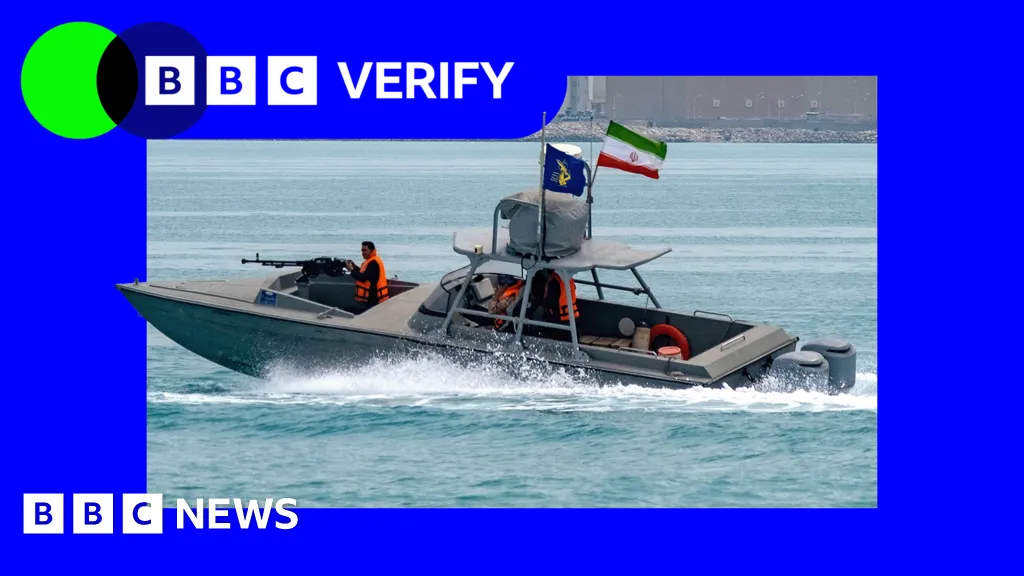
In a bold assertion of military dominance, Iran has declared a significant increase in the area it claims oversight over in the highly strategic Strait of Hormuz, a vital conduit for global oil transport. The Iranian government has published a map through its newly established Persian Gulf Strait Authority, alleging military control over more than 22,000 square kilometers (8,800 square miles) of the waterway, extending into the territorial waters of Oman and the United Arab Emirates (UAE).
This development marks a serious escalation in regional tensions, particularly as the UAE swiftly denounced Iran's claims as "nothing but fragments of dreams." Anwar Gargash, the diplomatic adviser to the UAE president, stated that Iran is attempting to solidify a new reality amid perceived military setbacks.
According to Iran, all maritime traffic through the Strait of Hormuz now requires permission from the Persian Gulf Strait Authority, a move likely to provoke further friction with the U.S. and allied Gulf nations, who have repeatedly rejected Iran's attempts to exert regional control. The U.S. Navy has explicitly instructed commercial vessels to disregard Iranian regulations.
Amid these rising tensions, Iranian media outlets linked to the Islamic Revolutionary Guard Corps (IRGC) released footage purportedly showing a strike on a maritime vessel in the Strait of Hormuz, which has raised alarm over maritime security in the region. The footage reportedly matches details of the Barakah, a Liberian-flagged tanker that had previously reported an attack.
These events unfold as U.S. forces conducted a boarding operation on an oil tanker suspected of violating American sanctions against Iran. The vessel, identified as the Celestial Sea, was intercepted in the Gulf of Oman. In a tactical maneuver, U.S. Marines were filmed rappelling onto the deck to ensure compliance with existing regulations regarding Iranian oil transfers.
Since the onset of the U.S. blockade against Iranian maritime activities, Central Command (Centcom) has intervened in 94 commercial vessels, demonstrating an ongoing commitment to enforcing sanctions established to curb Iran's oil exports. Following a brief inspection, the Celestial Sea was redirected—its destination now reported as the Omani port of Duqm.
Internationally, diplomatic channels remain active. On the horizon, there are efforts from Pakistan's military chief, Asim Munir, who is visiting Tehran in hopes of mediating peace discussions amidst escalating hostilities. Simultaneously, U.S. President Donald Trump hinted at a temporary halt to military actions against Iran, citing ongoing negotiations led by Gulf state leaders who advocate for a more stable resolution.
As the geopolitical chess game intensifies in the Persian Gulf, analysts closely watch the ramifications of Iran's expanded claims and the international community's response, which could further ignite a precarious balance of power in an already volatile region.
Source: BBC News
Source: BBC World News