In a concerning turn of events, an American national and a French woman have both tested positive for hantavirus after returning from the MV Hondius cruise ship, which recently faced a deadly outbreak while docked in Tenerife, Spain. The American has arrived in Nebraska for medical assessment, while the French woman is currently isolating in Paris, where her health has reportedly deteriorated.
The U.S. Department of Health and Human Services confirmed that a second American aboard the same repatriation flight is now exhibiting mild symptoms. Both patients were transported in biocontainment units as a precautionary measure, underscoring the gravity of the situation. Moreover, French Health Minister Stéphanie Rist conveyed that 22 additional individuals, who had close contact with the French patient, have been traced for monitoring.
Tragically, three passengers have died since their journey on the MV Hondius, with two of the deceased confirmed to have contracted hantavirus prior to their passing. Hantaviruses, which are primarily carried by rodents, pose a unique threat; human transmission of the Andes strain has been confirmed through several cases stemming from previous travelers in South America.
Symptoms of hantavirus infection can vary widely, with victims experiencing fever, debilitating fatigue, muscle pain, gastrointestinal distress, and respiratory difficulties. Health officials, however, maintain that the potential for a widespread outbreak remains exceedingly low, yet vigilance is advised.
In an effort to bolster safety measures, the U.S. health department emphasized that all 17 American travelers are set to undergo comprehensive medical evaluations in Nebraska. Earlier flights carrying U.S. nationals also revealed seven other passengers who were already in their home states under health monitoring protocols.
Amid growing apprehensions, World Health Organization (WHO) Director-General Tedros Adhanom Ghebreyesus pointed out that U.S. health policies deviating from WHO recommendations could invite increased risks. Notably, WHO guidance calls for a strict 42-day isolation period for all individuals who recently disembarked the vessel. Nonetheless, Dr. Jay Bhattacharya, Acting Head of the Centers for Disease Control and Prevention (CDC), sought to temper any unwarranted public alarm, asserting that human-to-human transmission of hantavirus is rare and should not be likened to the COVID-19 pandemic.
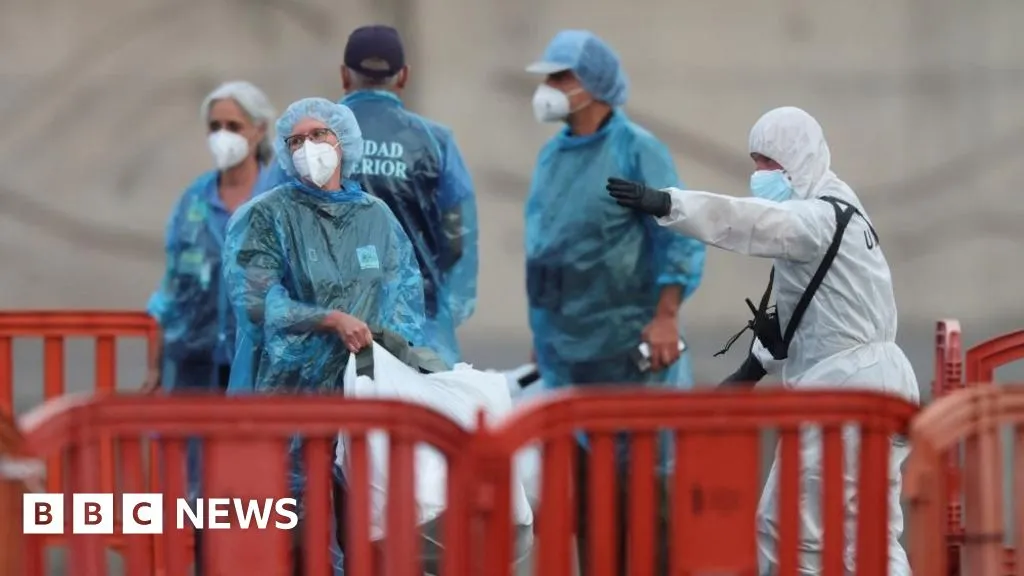
Eyewitness accounts from the disembarkation of MV Hondius revealed passengers donned in protective gear, including blue gowns and masks, as they stepped off the ship in Tenerife. Among passengers, five were French nationals on board, all of whom are now undergoing health assessments following their return.
As the situation unfolds, a separate repatriation flight carrying 20 British passengers has successfully landed in the UK, resulting in mandatory isolation at Arrowe Park Hospital in Merseyside for a precautionary 72 hours. Current reports indicate that none of the passengers show symptoms at this time.
Meanwhile, further efforts to contain the situation are underway across Europe, with 14 Spaniards flown to Madrid now in mandatory quarantine at a military hospital and additional evacuation flights planned for the coming days. The health community remains on high alert as more passengers are repatriated, while the ripple effects of this hantavirus outbreak resonate across borders.
Source: BBC World News