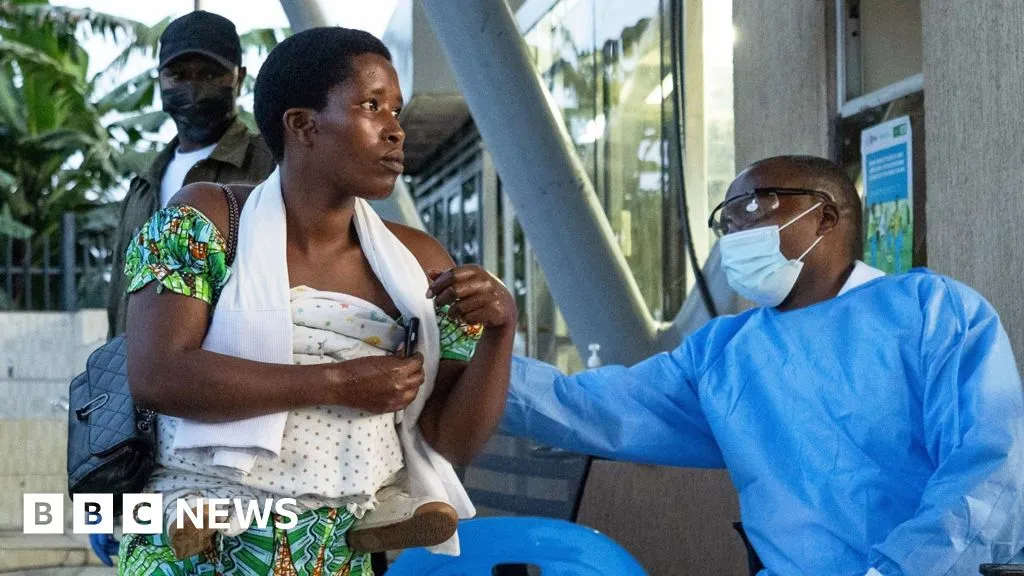
A deadly Ebola outbreak is escalating in Central Africa, with local officials and health experts warning that the number of suspected cases could far exceed the current estimates, which already stand at over 500. Residents near the epicenter in the Democratic Republic of Congo's (DRC) Ituri province are expressing profound fear, stating they feel powerless to protect their families as fatalities continue to mount swiftly.
Dr. Anne Ancia from the World Health Organization (WHO) revealed that early investigations into the outbreak suggest that many cases have gone undetected. Recent modeling by the MRC Centre for Global Infectious Disease Analysis indicates the possibility of over 1,000 cases, significantly more than the numbers officially reported.
Voices from the Ground
Locals are taking precautionary measures, such as frequent handwashing, but many acknowledge that they lack access to essential protective gear, including face masks. One resident, who identified himself as Bigboy, expressed the community's anxiety, saying, "We are really scared and wish we could get more help." Another local, Alfred Giza, noted, "We are aware of the threat, but there is little we can do without proper resources. If someone we know gets sick, we wouldn't even know how to help them."
The situation has prompted urgency from the Red Cross, which warns that Ebola can escalate rapidly if cases are not identified promptly. The agency emphasized the importance of community awareness and early detection as critical components in controlling the outbreak, which is compound by overwhelmed health systems and a lack of resources.
Government Response
In response to the crisis, DR Congo President Félix Tshisekedi convened a crisis meeting, urging calm among citizens while stressing the need for vigilance. The WHO, having declared the outbreak an international emergency last week, echoes this call. Dr. Tedros Adhanom Ghebreyesus, WHO's chief, expressed deep concern regarding the outbreak's scale and speed, highlighting that the region's instability complicates efforts to contain the virus.
The Human Toll and Cross-Border Fears
As of now, the Ebola virus has claimed 131 lives in DRC, with a single confirmed fatality in neighboring Uganda. Alarmingly, the outbreak appears to have begun spreading weeks before it was officially detected on April 24. Without an effective vaccine for the current strain of the virus, health officials face an uphill battle as they evaluate potential treatments that could help in controlling its spread.
Authorities in several African nations are tightening border screenings and enhancing preparedness protocols. Rwanda has shut its borders with the DRC, while Uganda is urging citizens to practice social distancing measures. Meanwhile, an American citizen, reportedly affiliated with a missionary group, is being evacuated for treatment after exhibiting Ebola symptoms, with U.S. health officials working to evacuate others who may have been exposed.
As the situation develops, the WHO is dispatching medical supplies, including personal protective equipment (PPE), to bolster local health responses. The lack of stability in regions like Ituri province, where the population frequently relocates, exacerbates the difficulty in managing the crisis and highlights the urgent need for comprehensive public health initiatives.
As the international community watches closely, health officials urge anyone in the region experiencing symptoms to seek medical help immediately and to adhere to guidelines designed to prevent further infections.
Source: BBC World News