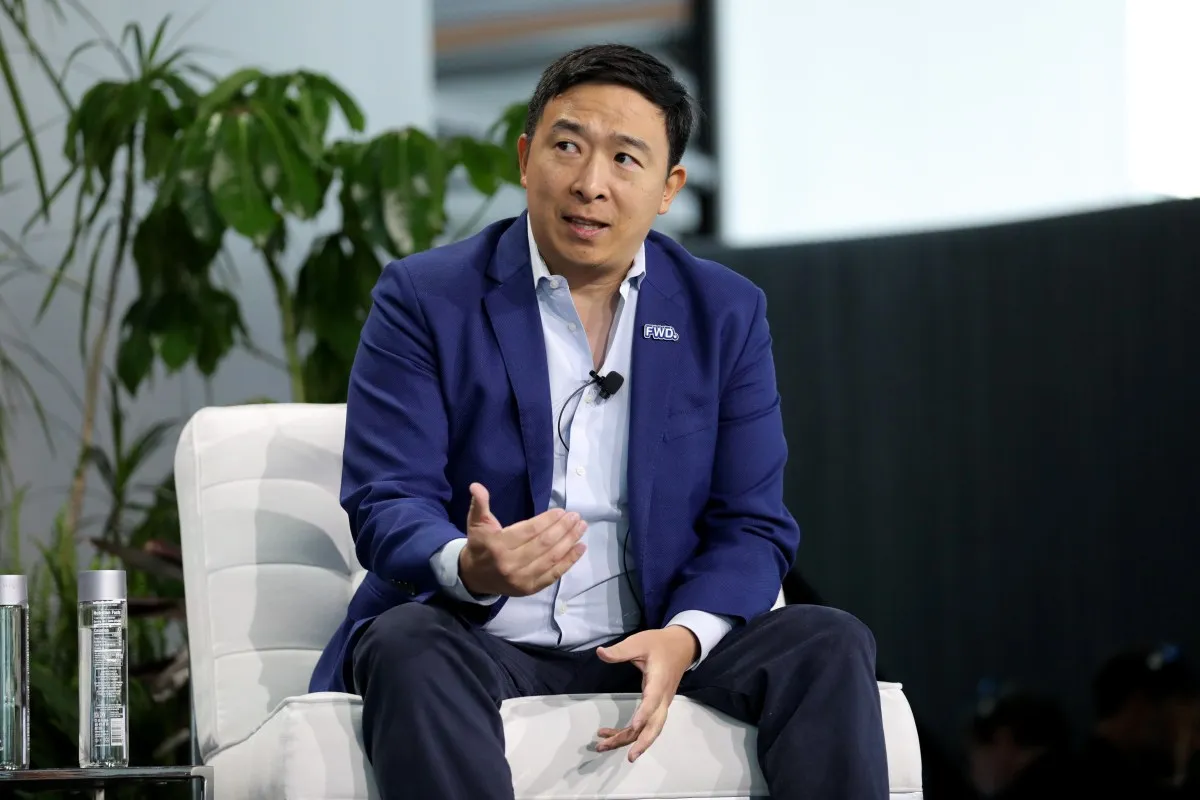
In a bold reimagining of the startup landscape, former presidential candidate Andrew Yang is championing a revolutionary approach: what if businesses focused on giving money back to consumers instead of siphoning it away? Inspired by the success of Mark Cuban’s Cost Plus Drugs, Yang is advocating for a new wave of startups that aim to lower the everyday costs burdens faced by Americans.
Yang has compiled a comprehensive inventory of essential expenses Americans face—housing, education, food, transportation, and wireless services—identifying them as fertile grounds for entrepreneurial innovation. In September, he launched Nobile Mobile, a mobile virtual network operator that not only offers cell services at significantly reduced prices but also provides refunds to users who consume less data. “The things we all spend money on,” Yang remarks, reflect significant potential to shift how startup economics operate.
Amid concerns of AI exacerbating economic disparities and workforce displacement, Yang perceives a distinct opportunity: creating business models that prioritize affordability and consumer enrichment. “AI is going to suck up a lot of the value and the jobs, and then Americans are going to look up and say, ‘How do I meet basic needs?’” he explained, reiterating his assertion that “meeting people’s needs more inexpensively” is a rich vein of opportunity.

A Legacy of Advocacy
This innovative perspective doesn’t spring from thin air. Yang first gained national attention during his 2020 presidential bid, where he argued for Universal Basic Income (UBI) as a solution to the economic challenges posed by automation and wealth concentration. Although his campaign did not secure the White House, the relevance of his principles has intensified, especially as technology progresses.
Yang remains a staunch advocate for UBI, asserting that the wealth generated by AI enterprises must be equitably redistributed among the populace. Despite his hopes for a government-led redistribution mechanism, he expresses skepticism regarding its efficacy compared to potential market-driven solutions.
Market Solutions and Sustainability
“There is room for a direct connection between the money and the people,” Yang noted, emphasizing the need for market dynamics to complement policy shortcomings. With Nobile Mobile rapidly expanding its customer base and achieving significant revenue milestones, Yang is determined to validate his thesis. “We’re unit profitable per customer, but we just share the profits with our subscribers with the idea that it’ll make you happy and encourage word-of-mouth,” he said.
Yang’s pitch is not just compelling; it is intrinsically linked to the financial well-being of future generations. He shared that average monthly savings of $50, compounded over 40 years, could accumulate to approximately $24,000—potentially aiding in securing retirement housing for many consumers.
Challenges Ahead
Nevertheless, attracting investment for consumer-focused enterprises is fraught with challenges. The current venture capital landscape is heavily skewed towards AI-driven startups, making it difficult for businesses with thin profit margins focused on social missions to secure funding. “I had at least one investor say to me around Noble Mobile, ‘Love you, Andrew—if you could just make this an AI company, we’ll invest,’” Yang recounted.
Despite the challenges, there is a shifting attitude in Silicon Valley. Increasingly, even the most successful firms recognize the importance of a thriving consumer base that possesses adequate purchasing power. Yang concluded, “The value being concentrated in the hands of a handful of folks and firms is just bad for everybody.” By encouraging entrepreneurs to tackle meaningful problems and build equitable business models, he believes that the next generation of companies can make a substantial impact.
“Think bigger and more broadly—some valuable opportunities are out there waiting to be discovered,” Yang urged, highlighting the potential for innovation that serves a broader societal purpose.
Source: TechCrunch
Source: TechCrunch