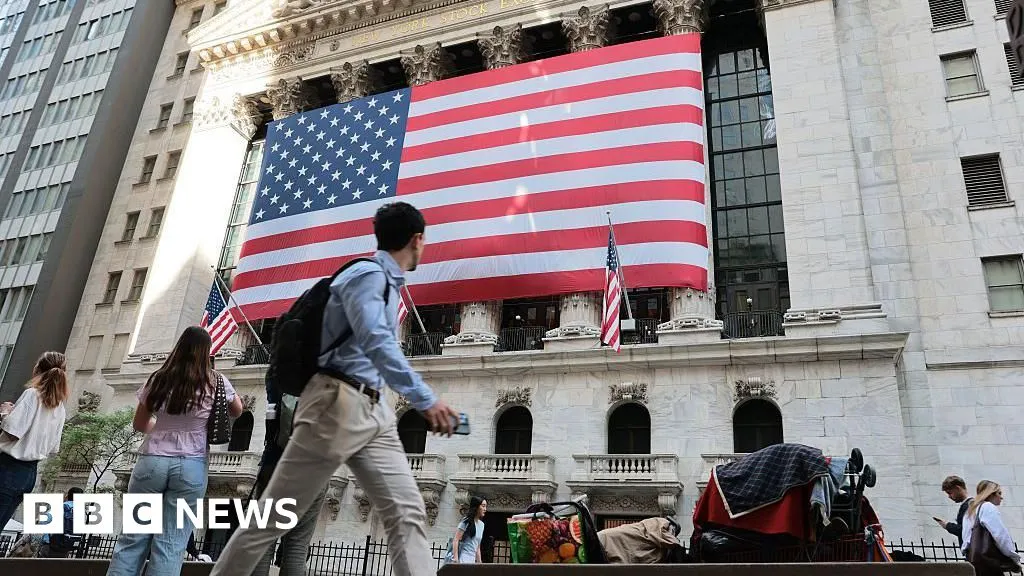
Despite a tumultuous global landscape, marked by trade wars and rising oil prices, the U.S. economy continues to outperform peers in an extraordinary display of resilience. A stark contrast between the Volkswagen assembly lines in Germany and BMW's massive plant in South Carolina epitomizes this economic anomaly.
As developed nations grapple with multifaceted challenges, including disruptive tariffs under the Trump administration and ongoing conflict in the Middle East, many economists expressed expectations for a downturn in U.S. growth. Contrary to these predictions, however, the American economy has maintained a steady annual growth rate of around 2%, showcasing its underlying dynamism.
Capital Expenditures and Productivity Gains
Joe Brusuelas, chief economist at RSM, posits that the trade war has inadvertently fortified the American economic spirit. "The own goals that the Trump administration has imposed on the U.S. in terms of trade and immigration are perhaps the clearest evidence of our economy's vitality," he explains. With corporations facing new tariffs on foreign components, rather than conceding to decreased profit margins, businesses have doubled down on investments.
Currently, capital expenditures (CapEx) account for an impressive 13.9% of U.S. GDP, defying conventional wisdom that suggested growth would wane amidst supply and demand shocks. This noteworthy statistic highlights the persistent rise in productivity, which has played a crucial role in the economy's ongoing expansion.
Energy Independence as a Buffer
Another vital aspect of the U.S. economic narrative is its remarkable transition in energy markets. Historical upheavals in oil prices would typically threaten growth; however, due to the shale revolution, the U.S. has emerged as one of the world's leading oil and gas producers. This newfound independence has significantly diminished economic vulnerability to energy shocks. "The shale boom and advancements in alternative fuels have halved oil's contribution to GDP over the past 50 years," Brusuelas states.
In contrast, European economies, reliant on long-term contracts and stringent supply chains, found themselves exposed during the energy crisis following the Ukraine invasion. With ongoing geopolitical tensions, this fragility remains evident.
Cultural Attitudes Toward Risk
Rebecca Christie, a senior fellow at the Brussels think tank Bruegel, argues that the divergence in performance is not merely a result of policy but also deeply rooted in cultural attitudes toward risk. She highlights that American enterprises are often driven by a solutions-oriented mindset, willing to embrace short-term risks for long-term gains. In contrast, European cultures tend to prioritize risk aversion.
This fundamental difference extends to how companies finance operations. In the U.S., firms commonly seek funding through equity markets and venture capital, offering them flexibility in decision-making. Conversely, many European companies are dependent on bank financing, restricting their ability to pivot and innovate.

The Inequality Challenge
While America's macroeconomic indicators present a story of resilience, it is crucial to recognize the underlying disparities that persist. Christie notes that these broad trends can obscure significant socioeconomic inequalities, stating, "If you are struggling in the U.S., the labor market may not be generating enough opportunities for you to thrive."
As the U.S. continues to navigate an unpredictable global economy, the interplay of investment, energy independence, and cultural approaches towards risk positions it uniquely for ongoing growth, though challenges like inequality cannot be overlooked.
Source: BBC News
Source: BBC Business