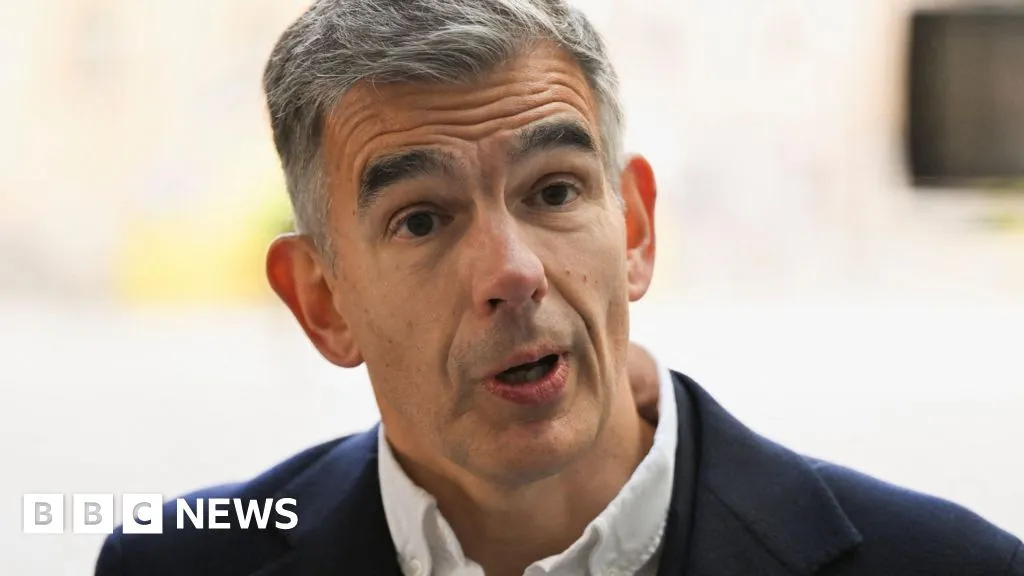
In a stark assessment of the BBC’s current landscape, new director general Matt Brittin has emphasized that the organization is confronted with substantial financial hurdles, necessitating ‘tough choices’ for its future sustainability. Reflecting on his inaugural day in the role, the former Google executive declared that the BBC has "never been more needed" amid significant financial pressures.
Brittin’s emphasis on the institution's value as a trusted news provider and cultural cornerstone comes as he gears up to make £500 million in budget cuts. These reductions are imperative to address what the BBC describes as ‘very real challenges’ that call for a strategic reassessment of its operational model. The challenge ahead is considerable, especially following the resignation of former director general Tim Davie amid controversies and ongoing legal disputes.
Confronting Urgent Challenges
Upon arriving at the BBC’s New Broadcasting House in London, Brittin expressed that he feels both “honoured” and “humbled” to lead the iconic institution. His arrival was met with protests from the National Union of Journalists (NUJ), where members are currently striking over proposed changes to shifts at World Service radio news programs. These protests signal a turbulent context as Brittin seeks to navigate these internal dynamics while also managing considerable external pressures.
In an email addressing staff, Brittin characterized the BBC as an organization with a rich history of reinvention, asserting that the corporation has continually adapted to meet the needs of its audience—whether during World War II or the COVID-19 pandemic. “We need to call on that sense of urgency now,” he urged, challenging his team to critically re-evaluate what the BBC would look like if it were being founded today.
A Future Shaped by Digital Transformation
The transition from a traditional broadcasting model to a digitally-focused organization is a priority for Brittin. Reflecting on his experience at Google, he acknowledges the significance of adaptability, stating, “We must be where audiences are and experiment more bravely.” His approach underscores the importance of innovation within BBC’s offerings to ensure they resonate with modern audiences, particularly younger demographics who engage primarily online.
As critics highlight the urgency of this transition, award-winning producer Ash Atalla noted the palpable pressure on Brittin to evolve the BBC's strategy swiftly. “The BBC has been a little lethargic at making it digital-first, which is critical to engaging young audiences,” he said, emphasizing the need for an immediate shift in focus.
Budget Cuts and Future Direction
Details regarding further cuts to BBC services are expected in the upcoming months, with projections suggesting as many as 2,000 job losses as part of the financial recovery plan. Dame Caroline Dinenage, chair of the House of Commons Culture, Media, and Sport select committee, highlighted that Brittin faces a significant challenge during a “period of turbulence” following high-profile controversies within the organization.
As negotiations with the government loom over the renewal of the BBC’s royal charter—set to expire in 2027—the direction Brittin takes will undoubtedly shape the future of the broadcaster. Facing the dual challenges of maintaining trust while navigating financial labyrinths, Brittin's leadership will be closely scrutinized, both within the organization and by viewers nationwide.
Source: BBC News
Source: BBC Entertainment